Case study
Ethical Eaters
The menu is marketing. The invoice is proof.
90-second version
- A diner who cares how the animals were raised can spend 30 minutes on a restaurant's site, its press and its supplier claims, and still be guessing at the table.
- Live today: sourcing report cards on the web, an iOS app with an Instant Audit that builds a report on the spot (back on the App Store soon), and a B2B engine that turns a supplier invoice into the restaurant's next campaign.
- 60+ users on $0 marketing. 2,700+ sourcing reports in the app.
Problem
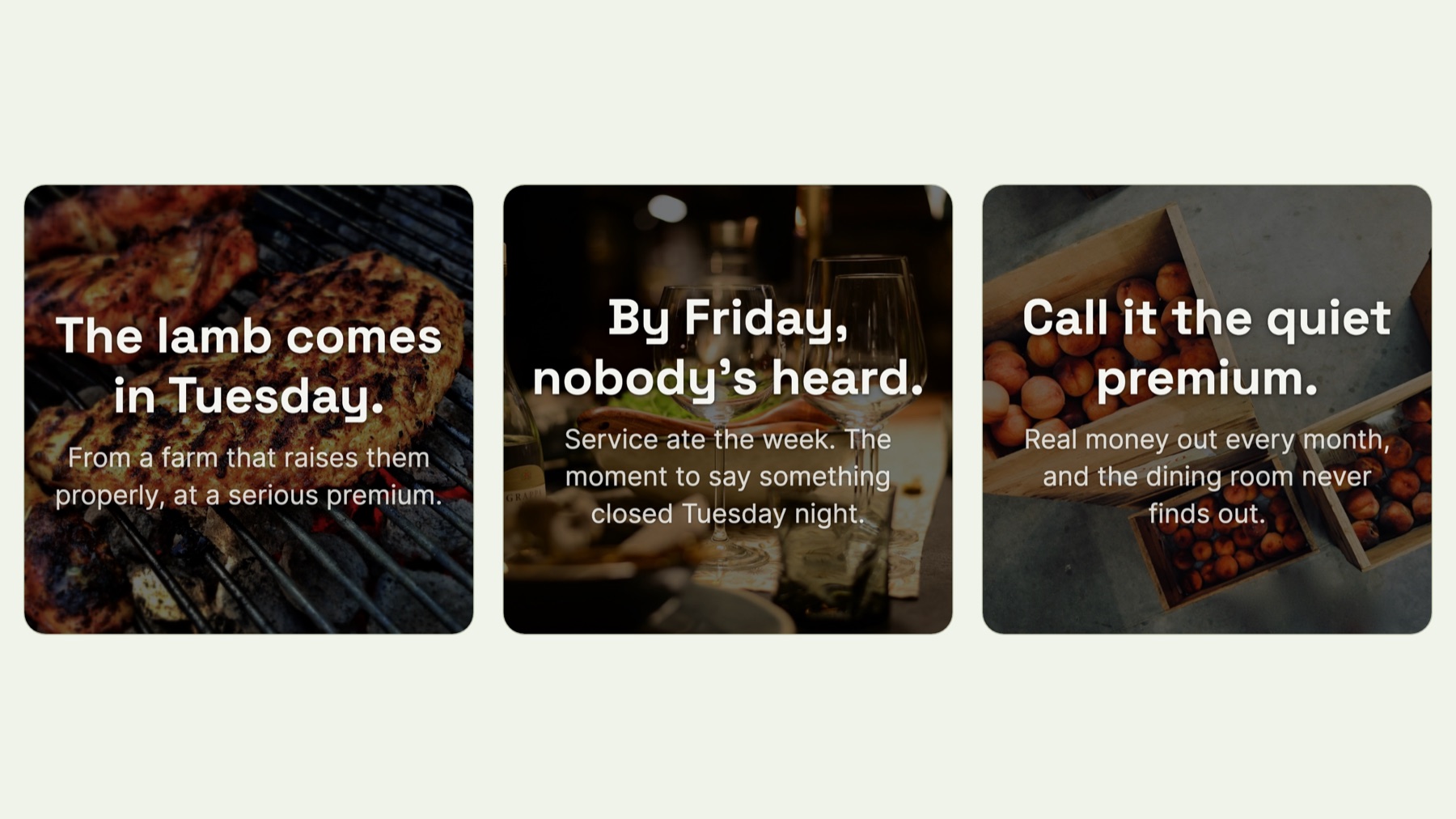
A menu says humanely raised. Checking it means reading the restaurant's site, its press and whatever it has said about its suppliers, then separating the marketing from the sourcing. That is 30 minutes of work for one dinner, so almost nobody does it and the menu gets believed on faith. The farms and fisheries on the other end have the opposite problem. They raise the animals the way the menu describes, they deliver, and then nobody tells that story. There is no marketing team on a farm.
Non-obvious insight
The diner and the farm are the same research problem read from two ends. Answering where this chicken came from for a Friday table is the same supply-chain dig a restaurant needs to prove it buys well. So I built one pipeline and pointed it in two directions. The B2B trigger fell out of that: a supplier invoice is the moment the sourcing story becomes true, which makes it a better reason to post than any marketing calendar.
Bets I made
- Three things to know before you go beats a star rating. Someone who cares where the pork came from isn't shopping for a score. They want the specific claim checked.
- An invoice is a better campaign trigger than a content calendar. The week the delivery lands is the week the claim is true and the restaurant has something real to say.
- One agent stack, two surfaces. Rebuilding the research layer for the B2B side would have doubled the maintenance for the same job.
What shipped
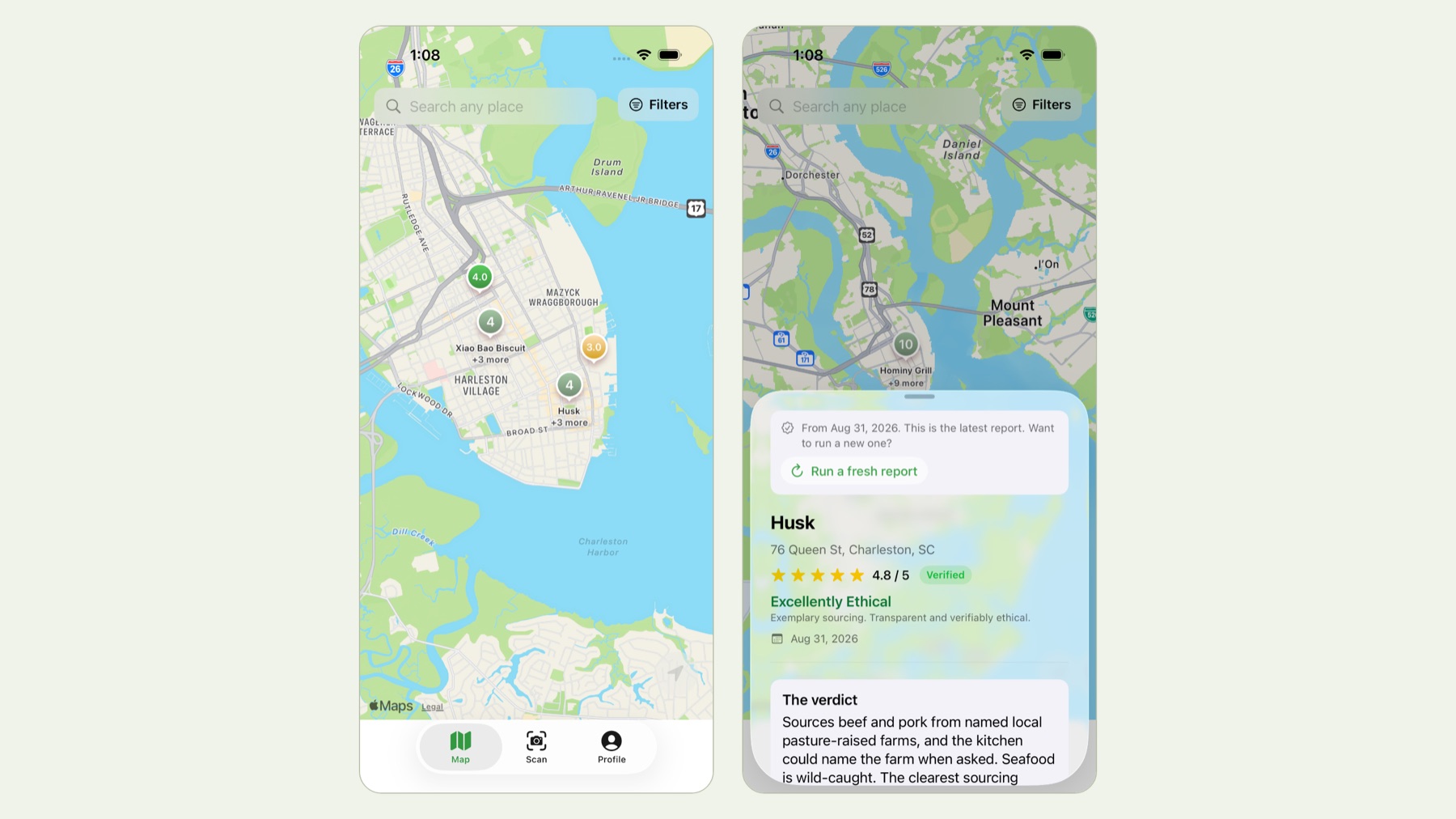
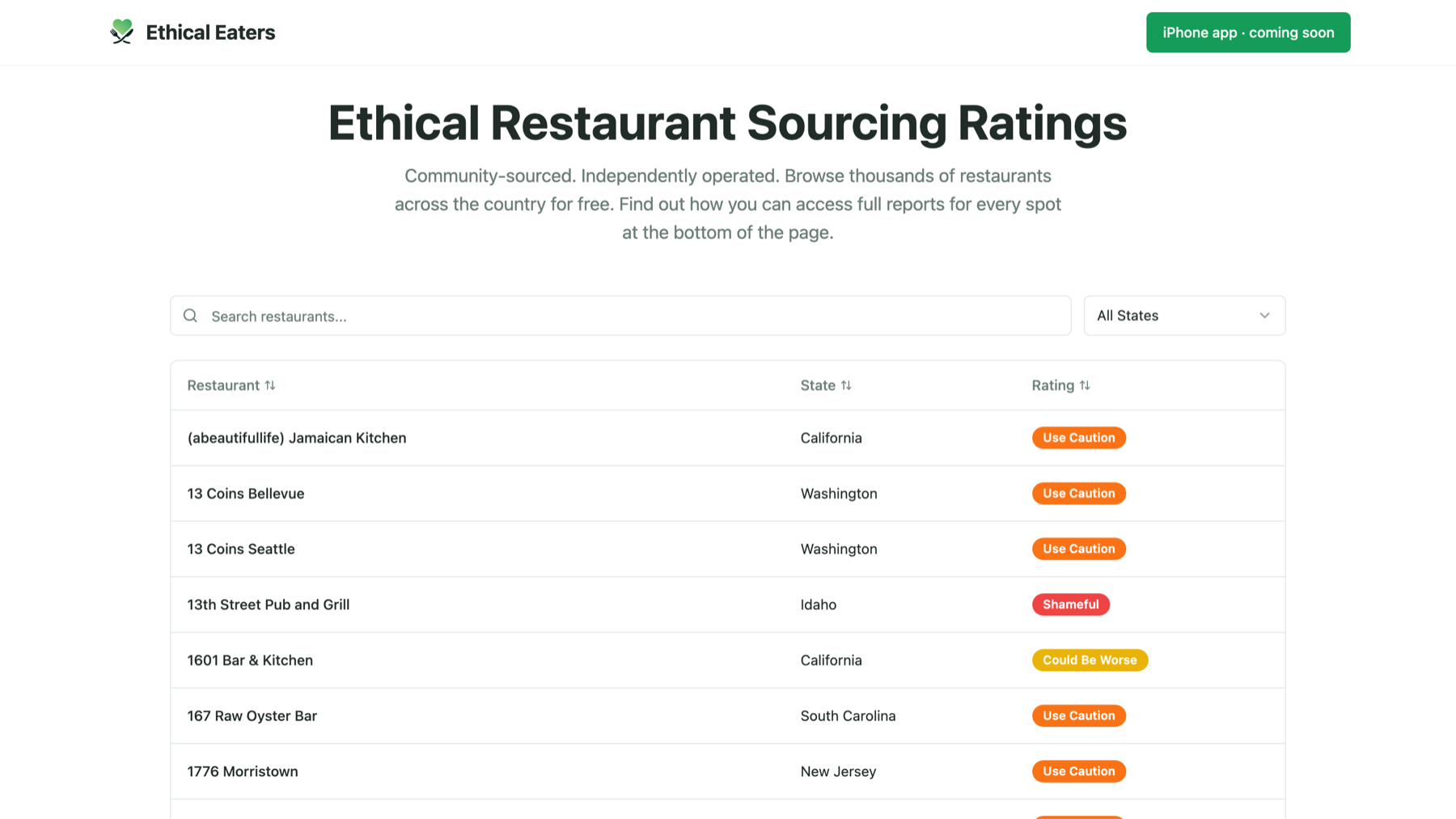
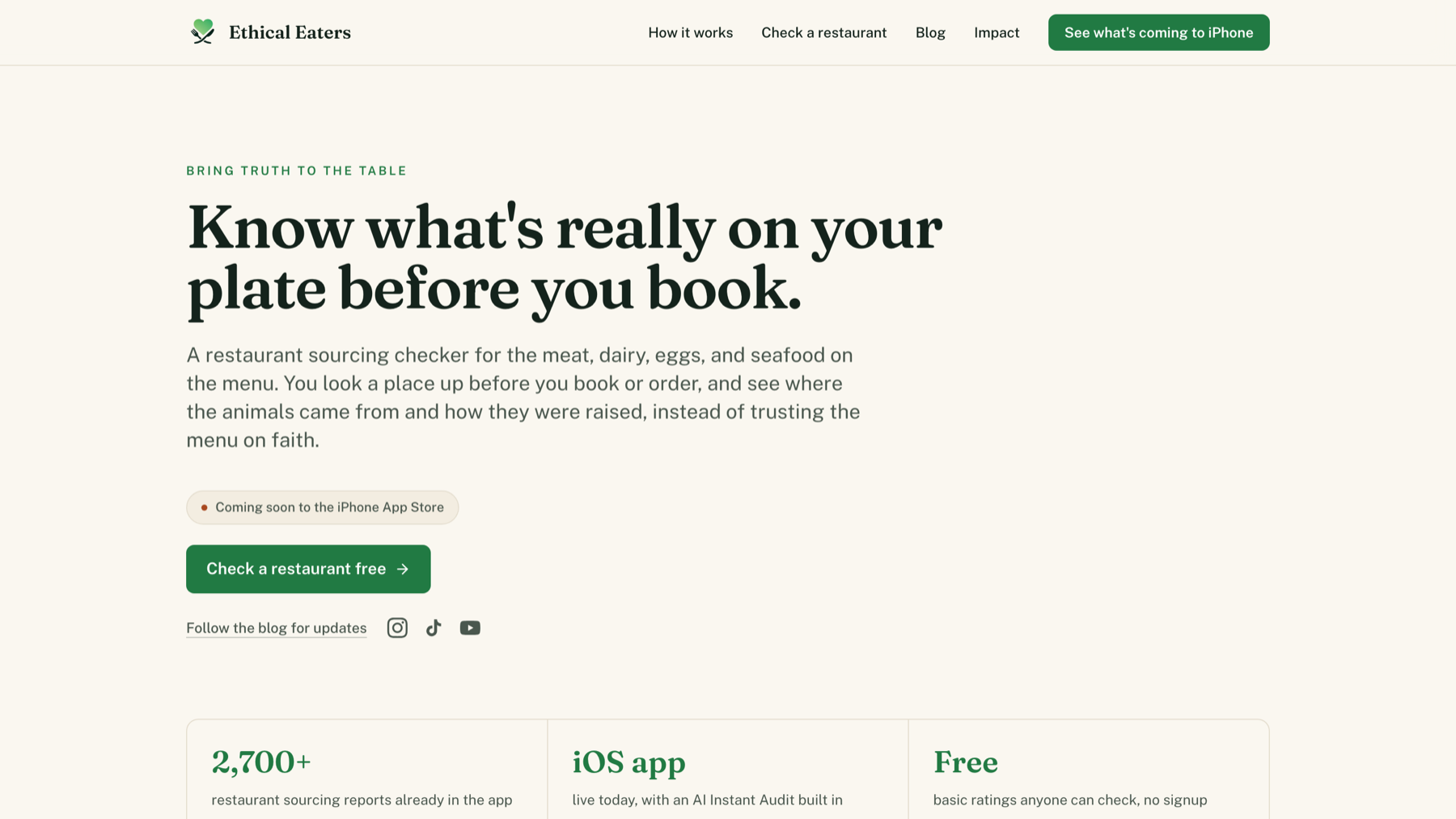
- Sourcing report cards. Look up a restaurant, see where the meat, dairy, eggs and seafood came from, and see the menu's claim next to what the sourcing backs up. Basic ratings are free and need no signup.
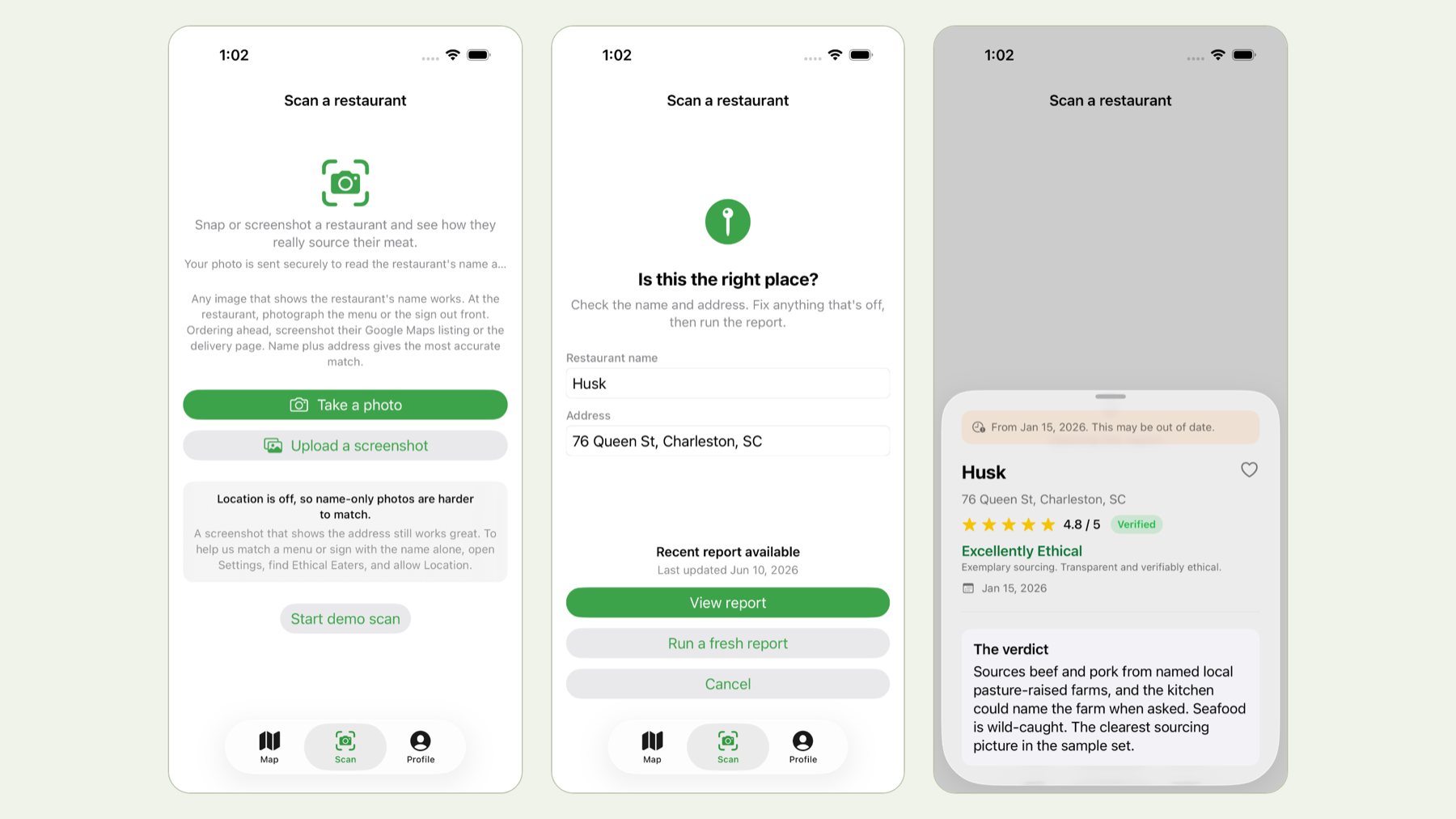
- iOS app with an Instant Audit. Pick a restaurant nobody has rated yet and it builds the sourcing report on the spot. 2,700+ sourcing reports in the app today. The App Store listing is on its way back; the free web check is open to anyone now.
- B2B campaign engine. An invoice from a humane farm or fishery lands, and the engine drafts the email, the short-form video and the carousels for every social account the restaurant runs. A human approves every post before it goes out.
- 60+ users on $0 marketing. Every quarter, 25% of profits go to a humane farm or an animal welfare organization through the Quarterly Impact Fund.
Evals and instrumentation
A sourcing claim has to survive at least 3 public sources before it lands on a card. When it doesn't, the card says the sourcing can't be confirmed instead of guessing, and no rating is ever invented for a real restaurant. Report generation runs under 30 seconds on cached inputs. On the B2B side the gate is a person: nothing reaches a restaurant's audience until a human approves the draft, the same approval pattern the MarginFront GTM loop uses.
What broke
The first report cards laundered marketing into fact. A restaurant's own site said humanely raised, the agent read that as evidence, and the card handed it back with more authority than it had earned. Fix: press and third-party sources outrank a restaurant's own copy, and a claim that only appears in the restaurant's marketing gets labeled unconfirmed. The first B2B drafts failed the other way. They read like every other AI-written restaurant post, so I rewrote the voice prompt against a corpus of human-written restaurant copy.
What's next
Supplier onboarding, so the campaign fires from the farm's side the moment it ships an order instead of waiting on the restaurant. A report card API, so a booking app can show the sourcing at the moment someone picks the table.